
01 / WhatsApp
Sales enquiries
Product-family enquiries, quotations and commercial discussions.
+86 19928199130Message salesRF MODULES / PRODUCT INFORMATION
6–18 GHz is a requested microwave scope for review, not a supplied New Ark module range. The current 22-record catalogue contains no documented model covering the complete interval, so this page explains how to read the boundary and what evidence a future civilian project review would need.
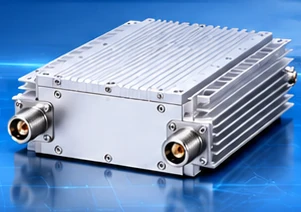
01 / 6–18 GHz feasibility
The catalogue stops short of a complete 6–18 GHz record. Its broadest nearby entry is reference 15, labelled 1–6 GHz and 1–6.2 GHz, revision 2, with a note that its power claim requires validation. That record does not extend to 18 GHz, and it is not a matched product for this request. Other records below 6 GHz or within narrower intervals should not be combined to imply continuous coverage.
Accordingly, 6–18 GHz remains requested feasibility scope rather than a supplied module, standard item, or availability statement. Frequency overlap alone also says nothing about gain, linearity, thermal behaviour, connector format, enclosure, signal type, or integration responsibility. New Ark can use this page as a navigation point for a written review, while the catalogue boundary remains visible instead of being filled with an inferred model.
02 / 6–18 GHz feasibility
A device, a packaged MMIC, a power-amplifier module, and a complete instrument are different evidence levels. Qorvo’s public amplifier catalogue illustrates that distinction with separate product records carrying their own frequency intervals; an example X-band amplifier is listed for 8.5–10.55 GHz, not as proof of every band around it. A frequency label therefore identifies the scope of one documented item, not a universal technology capability.
NXP’s RF power-device note further explains that large-signal input and output impedances vary with frequency and operating conditions, and that published device impedances are approximations for an initial circuit design. For a 6–18 GHz review, upstream device documentation cannot substitute for a module data sheet. The review must keep the exact item, revision, band definition, packaging, and stated evidence together.
03 / 6–18 GHz feasibility
A useful review starts with the requested endpoints and meaning of bandwidth: continuous 6–18 GHz coverage, separate sub-bands, or another defined interval. It should then ask for the applicable product document, revision identity, frequency conditions, stated power terminology, connector and mechanical information, and any explicitly missing fields. These are documentation questions, not promises that a design, source, or delivery path exists.
The same discipline applies when the context is civilian communications, laboratory work, or other lawful electronics documentation. A component label does not establish suitability for a particular application, nor does it establish a complete calibrated bench instrument or a standards-specific result. Any future conclusion should be tied to the exact written evidence supplied for the reviewed item, with unknown or conflicting values left open for confirmation.
04 / 6–18 GHz feasibility
Civilian test documentation treats a wideband amplifier as a device whose behaviour must be characterized under defined conditions. Keysight describes stimulus-response and distortion characterization as ways to evaluate RF components, while noting that results depend on the signal and measurement chain. That supports a documentation review of what is measured and reported; it does not provide operating settings, a test procedure, or a performance guarantee for an unlisted 6–18 GHz module.
Accreditation scope is a separate question from a product frequency label. ILAC’s guidance says that a scope description represents the services for which a conformity-assessment body has demonstrated competence, while IEC distinguishes a test report from an independent certification decision. For this page, those references support careful scope language only: any external laboratory or report would need to be checked for its stated method, range, uncertainty, and applicable scope rather than assumed from a logo or general capability.
SCOPE / NO ASSIGNED MODEL RECORDS
No 6–18 GHz model is documented in the current 22 reference records. This page is a feasibility discussion, not a supplied-module or availability claim.
DOCUMENTATION / READING CONTEXT
Qorvo product documentation
NXP application note
Keysight RF and microwave measurement documentation
International Laboratory Accreditation Cooperation
International Electrotechnical Commission
Sources support the topic discussion; they do not independently validate the supplied module records or establish project suitability.
PRODUCT TOPIC / COMMON QUESTIONS
No. The current 22-reference catalogue has no documented model covering the complete 6–18 GHz interval. This page is a feasibility review, not a matched product listing or a custom-availability promise.
No. Reference 15 is documented as 1–6 GHz and 1–6.2 GHz in revision 2, with a note that its power claim requires validation. It ends well below 18 GHz and must not be presented as a 6–18 GHz match.
Confirm whether the request means continuous coverage or defined sub-bands, then obtain the exact document revision, frequency conditions, power terminology, package and connector information, and any missing or conflicting fields.
No. A frequency label is only one piece of product evidence. Application suitability, measurement validity, and any standards-related conclusion require item-specific documentation and an appropriately defined external scope.
Continue exploring
Return to the parent category or read another topic in the same group.
RF MODULES / PRODUCT INFORMATION
Open the RF catalogue, download the English Excel workbook or view all 22 independent reference records. Recorded values and revision differences still require confirmation.
07 / CONSULTATION
Choose a contact based on what you need to discuss. All three links open WhatsApp directly—no registration or enquiry form required.
Product-family enquiries, quotations and commercial discussions.
+86 19928199130Message salesModule questions, product documentation and technical clarification.
+86 18123677761Message technical supportA project-specific discussion about mechanical fit, interfaces and support scope.
+85295658748Message the project team