
System-level coverage reference
AIRSPACE SECURITY / SV-A SERIES
SV-ANEW ARK / ARC-PERIMETER · ANALYTIC RF PROJECT REFERENCE
SV-A analytic RF reference
for sensitive airspace perimeters.
The SV-A series provides an analytic-RF identification and governed-response-interface reference for project integration with radar, acoustic sensing, EO/IR, and C2. This page is for project assessment only: spectrum use, configuration, remote roles, and any response arrangement require competent-authority approval, site authorisation, electromagnetic-compatibility review, and written validation.
Health monitoring & alert reference
Model-specific spectrum reference
Project-level coordinated assessment
AIRSPACE EVENT REFERENCES / 02A
Observed airspace footage for readiness discussion, not an event conclusion.
These owner-provided video excerpts introduce project questions before a site selects any capability: perimeter awareness, alert coordination, aviation and communications protection, accountable human review, and written validation.
Reference 01
Drone footage near a built perimeter
News-style footage shows a quadcopter near trees and built structures, alongside studio reporting and aircraft imagery. It prompts discussion of exterior sensing and authorisation paths; this page does not verify the report.
Reference 02
Airfield and aircraft footage with drone visuals
Broadcast footage juxtaposes quadcopter visuals with aircraft and airfield activity. It illustrates why aviation coordination and accountable review must precede any project decision.
Reference 03
Aerial footage near smoke-affected terrain
The clip shows aerial and response-oriented imagery near vegetation, smoke, and ground infrastructure. It frames questions about protected airspace, multi-source corroboration, and site-responsibility planning.
Reference 04
Reported drone-activity footage around an airfield
News footage shows drone visuals, an installation entrance, and aircraft activity with on-screen reporting language. It is a context prompt for alert escalation and event documentation, not an independently verified incident record.
Reference 05
Nighttime industrial-facility footage
Nighttime surveillance-style footage shows tanks, piping, an airborne object, and a sudden fire/explosion. Use it to examine safe-offset sensing, hazardous-area separation, and emergency-communications review; this page does not confirm cause or context.
Reference 06
Drone visuals above major public gatherings
Footage shows dense crowds, stadium settings, and aerial-object visuals above event spaces. It is a prompt for crowd safety, public communications, venue coordination, and accountable escalation planning.
Reference boundary: individual clip details, location, date, actors, intent, cause, and outcome are not independently verified on this page. They do not demonstrate a system result, operational method, or site suitability.
SV-A PRODUCT MATRIX / 02
Six form factors, organised around site conditions and project selection.
This public matrix shows form factor, spectrum configuration, dimensions, weight, and coverage references. Actual configuration, legality, delivery scope, and performance require project confirmation.
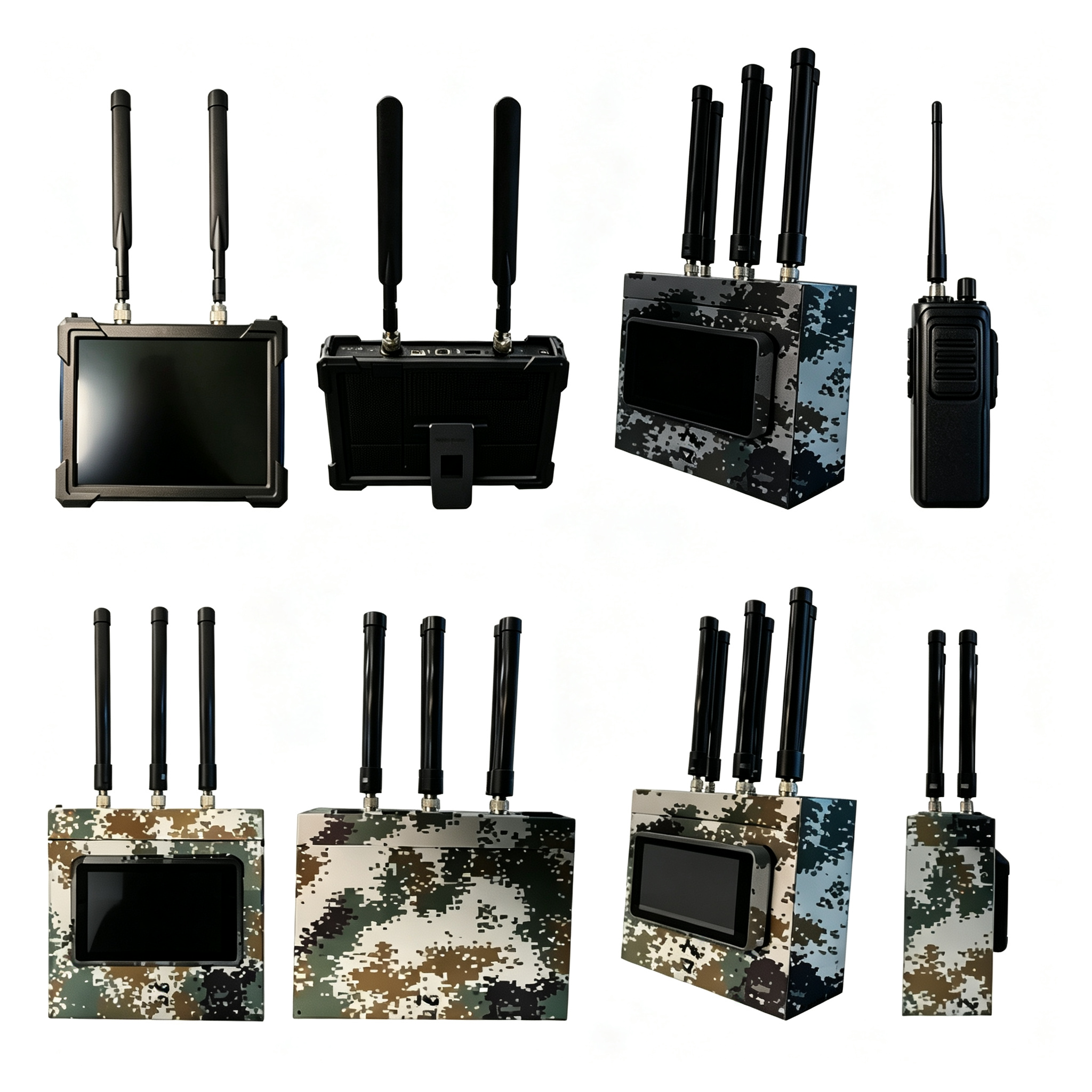
SV-ASV-A SERIES / PUBLIC PRODUCT MATRIXFORM FACTOR → SITE REVIEW → WRITTEN SCOPE
FOUR PROJECT ADVANTAGES / 03
In electromagnetically sensitive settings, validate the boundary before discussing capability.
Aviation-grade EMC assessment
Treat civil navigation, airborne and ground communications, site Wi‑Fi, and public mobile services as inputs to independent assessment, permissions, and field tests; this page makes no zero-interference claim.
Safety outcome as a validation objective
Projects can assess risk reduction, event escalation, and recording paths under authorised rules; no target state, return path, or flight result is publicly guaranteed.
Complex RF-environment assessment
Supports project-level discussion of protocol change, non-standard links, and multi-source alerts without publishing frequencies, power, or execution parameters.
Routine-operations reference
Health state, alert tiers, logs, and authorised roles can be designed at project level; continuous operation depends on site networks, power, accountable personnel, and competent-authority conditions.
TECHNOLOGY PRINCIPLE / 04
Analytic-RF project path: identify, corroborate, authorise, and audit.
The public page presents only safety architecture and governance order; it provides no RF suppression, control, or execution procedure.
01
Spectrum-context review
Within an authorised monitoring scope, review project-relevant signals together with defined protection rules for lawful services.
02
Multi-source corroboration & event tiering
Corroborate radar, acoustic, EO/IR, or field-event information and escalate alerts under project-defined rules.
03
Authorised interface & audit
Assess any governed interface only where permissions, site conditions, human roles, and written procedures are satisfied; retain records for review.
FIVE ASSURANCE DOMAINS / 05A
Keep spectrum protection, evidence quality, and accountable authority in the same project frame.
Adapted from an analytic-RF reference structure, these five domains organise questions for written project assessment; they are not mode settings, detection guarantees, intervention actions, or response instructions.
01
Receiving postureDefine the passive sensing boundary
Assess whether a proposed receiving configuration supports the intended monitoring boundary, while keeping local electromagnetic-compatibility implications, installation conditions, and written confirmation within project scope.
02
Protected servicesList the services that must remain protected first
Bring civil aviation navigation, satellite positioning, Wi-Fi, cellular, maritime, and site-private networks into the assessment; coexistence and outcomes require independent testing.
03
Evidence roleA signal is not a conclusion
Review RF context alongside acoustic, radar, EO/IR, and field records; no single signal condition should establish identity, intent, or risk.
04
Node topologyFixed, mobile, and multi-node are project options
Discuss fixed, mobile, or multi-node arrangements in written scope; this page makes no claim about coverage, location accuracy, or availability.
05
Authority & auditUse written authorisation to define the next interface
Only a written scheme can define C2 data responsibility, event escalation, human roles, and permitted interfaces; regulatory-sensitive functions remain disabled until complete authorisation is in place.
Here, protection and coexistence identify validation questions—not promises of performance, zero interference, authorisation, or safety outcomes.
ARCHITECTURE COMPARISON / 05
Governance differences between an analytic project architecture and broad-emission thinking.
This comparison is a high-level design and governance reference. It makes no claim about any product, competitor, approval result, or site outcome.
| Project consideration | SV-A analytic-RF project reference | Traditional broad-emission reference |
| Signal-handling logic | Identification, rule confirmation, and governed interface assessment | A wider-scope emission approach |
| Communications & aviation protection | Independent EMC, permissions, and site validation are preconditions | Also requires independent assessment; fit cannot be inferred |
| Safety & result | Human authorisation, event recording, and written validation are governance priorities | Potential external effects and safety results require independent assessment |
| Continuous operation | Health monitoring, roles, logs, and fault escalation can be scoped into a project | Operating boundary, accountable staff, and regulatory conditions must be separately defined |
RF PROJECT GOVERNANCE / 05B
Compare RF project paths by what can be evidenced, protected, authorised, and audited.
This companion table converts broad-emission and analytic-RF themes into bounded project questions. It does not publish RF emissions, power, frequency, protocol-analysis, targeting, response, or control instructions.
| Project question | Broad-emission proposal: what needs independent review | Analytic-RF reference: what needs independent review |
|---|---|---|
| Signal context | A wider-emission concept does not itself establish whether a signal is lawful, authorised, or relevant. Evaluate intended scope, protected services, and potential effects before any authorised project decision. | Passive reception and analytic context may support review of observable signals, evidence confidence, and event records. They do not automatically establish object identity, intent, or permission to act. |
| Communications protection | Civil-aviation, navigation and positioning, emergency, public-mobile, maritime, and site-private services require site-specific spectrum and EMC review. No non-interference outcome is implied. | The same protected-service register, local rules, EMC process, and independent validation are required. Passive reception does not remove data-governance, site, or authorisation obligations. |
| RF-silent and non-observable conditions | RF context alone cannot establish awareness of every object or operating condition. | Analytic RF can be one information source. Radar, passive acoustics, EO/IR, site records, and accountable review remain complementary project inputs for RF-silent or other non-observable conditions. |
| Response governance | This public reference supplies no broad-emission procedure. Any regulated response concept requires competent-authority permission, site authorisation, accountable human roles, and written safety controls before assessment. | Any governed interface should remain disabled by default and be assessed only under documented authority, role controls, audit controls, and validation. No response outcome is promised. |
| Evidence, audit, and change | Define event records, protected-service observations, change control, maintenance ownership, and escalation in written project documentation. | Define data roles, confidence and evidence treatment, third-party interfaces, logs, change control, and review in the same written project documentation. |
| Project selection | Fit cannot be inferred from form factor or a public comparison. Site conditions, lawful scope, and the safety case determine whether any option can be evaluated. | Fit cannot be inferred from a reference architecture, published band, or software description. Evidence, integration, and permitted scope require site validation. |
Before assessment
List lawful services that must remain protected, the site boundary, responsible parties, and the relevant authority requirements.
During assessment
Treat RF context as evidence to be corroborated with complementary sensing and accountable review; do not elevate a single indicator into a conclusion.
Before any regulated interface
Require written approvals, site authorisation, EMC review, defined human roles, change control, event logging, and independent validation.
No claim is made about continuous monitoring, identity, location, compatibility, coverage, response outcome, or site suitability. Each conclusion remains conditional on lawful scope and independent validation.
Public project-governance reference based on supplied comparison themes. It is not independent comparative testing or a claim about any third-party product.
MULTI-SENSOR & C2 INTEGRATION / 06
Open interfaces connecting early warning, identification, project assessment, and governance.
Fusion reduces single-sensor uncertainty. Interfaces, data ownership, remote roles, and event retention are defined by the project plan.
Radar-system integration
Receive authorised bearings, track cues, and alerts, using RF information as a project-level corroboration reference.
Acoustic & EO/IR integration
Fuse passive acoustic alerts and optical confirmation to supplement assessment of RF-silent or low-visibility targets.
C2 command-system interface
Report status, alerts, and tracks through project-defined interfaces, coordinating nodes within role permissions and audit rules.
Remote early-warning layer
Radar / acoustic / EO/IRLong-range information acquisition, bearing or track reference, and early alerts.
Core identification layer
SV-A analytic-RF nodeSignal confirmation and governed-interface assessment under site-authorised rules.
Area governance layer
C2 command platformSituation visualisation, role permissions, log audit, and third-party project coordination.
APPLICATION CONTEXTS / 07
Project discussions for critical infrastructure and authorised high-security sites.
These contexts help organise perimeter, sensor, communications, and governance requirements. They do not establish availability, deployment permission, or response authority.
Airport airspace safety
Civil & regional airports
Independently review aviation operations, spectrum, site-authority, and electromagnetic-compatibility requirements around runways, terminals, and outer perimeters.
PROJECT CONTEXTHigh-risk energy facilities
Inland oilfields
Project-level airspace awareness and event-record discussion for well-field, pipeline, and external-perimeter conditions.
PROJECT CONTEXTRefineries
Plan perimeter systems from safe buffer zones outside hazardous process areas, with communications protection and written validation.
PROJECT CONTEXTOil-and-gas storage depots
Assess tank-farm perimeter context, interface coordination, and continuous-maintenance requirements.
PROJECT CONTEXTLNG & chemical parks
Review hazardous-area boundaries, EMC, site permissions, and multi-sensor corroboration for project design.
PROJECT CONTEXTBorder and checkpoint facilities
Land-border control units
Authorised projects for border-perimeter alerting, event retention, and cross-node coordination.
PROJECT CONTEXTBorder outposts
Assess power, communications, installation conditions, and accountable roles at remote sites.
PROJECT CONTEXTBorder checkpoints
Plan communications protection, site operations, and human-authorisation processes for pedestrian and vehicle-dense areas.
PROJECT CONTEXTMining and strategic resources
Large open-pit mines
Organise project scope around wide extraction areas, multi-node sensing, and operational safety boundaries.
PROJECT CONTEXTRare-mineral mining areas
Discuss protected zones, perimeter inspection, event audit, and compliant interfaces.
PROJECT CONTEXTHigh-security detention settings
Prisons
Plan security projects around external perimeters, existing video systems, event corroboration, and site permission.
PROJECT CONTEXTHigh-security detention centres
Support project design for layered sensing, alert governance, accountable roles, and log retention.
PROJECT CONTEXTPorts, terminals, and logistics
Ocean-going cargo ports
Assess vessel-communications protection, broad operational areas, terminal operations, and multi-party coordination.
PROJECT CONTEXTContainer terminals
Plan around yards, loading zones, automated facilities, and site-operating boundaries.
PROJECT CONTEXTWater and hydropower infrastructure
Large hydropower stations
Discuss perimeter and operating conditions across dams, plants, reservoirs, and critical auxiliary facilities.
PROJECT CONTEXTDams
Organise validation around critical structures, adjacent waters, navigation and communications protection, and site authorisation.
PROJECT CONTEXTInland water-control hubs
Address multi-node event governance and audit needs for sluices, pump stations, and regulation hubs.
PROJECT CONTEXTPrivate and high-value settings
Luxury villa compounds
Discuss authorised privacy protection, property boundaries, public-communications protection, and facilities coordination.
PROJECT CONTEXTGolf courses & resorts
Assess open-site conditions, visitor safety, event management, and low-impact installation constraints.
PROJECT CONTEXTDefence and industrial-protection perimeters
Military-base perimeters
Only under competent-authority permission, discuss existing sensors, layered alerts, and accountable boundaries.
PROJECT CONTEXTNational-defence warehouses & industrial zones
Assess authorised projects for material stores, research and manufacturing zones, and perimeter safety processes.
PROJECT CONTEXTAmmunition-depot perimeters
Treat safe offsets outside hazardous areas, EMC review, and written procedures as prerequisites.
PROJECT CONTEXTProtected government facilities
Key government closed compounds
Discuss authorised exchange of alerts, status, and audit information with existing security systems.
PROJECT CONTEXTParliamentary & major public institutions
Plan site operations, communications protection, and human roles across specific events and routine periods.
PROJECT CONTEXTConfidential government facilities
Project assessment requires lawful authorisation, confidentiality safeguards, data governance, and written review.
PROJECT CONTEXTMobile deployment and major events
Temporary field sites
Discuss temporary power, communications, installation, recovery, and accountable handover conditions.
PROJECT CONTEXTTemporary assembly areas
Plan authorised short-term perimeter alerting, event records, and multi-agency coordination.
PROJECT CONTEXTVehicle-borne projects
Assess vehicle platforms, route context, site transitions, and human-authorisation processes.
PROJECT CONTEXTLarge outdoor events
Support temporary airspace-safety planning for concerts, sports, and public gatherings, including crowd communication.
PROJECT CONTEXTAuthorised counter-terrorism exercise sites
Restricted to legally approved exercises with defined safety rules, audit records, and on-site responsibilities.
PROJECT CONTEXTSV-A FAQ / PUBLIC PROJECT REFERENCE
Frequently asked questions and compliance boundaries.
These answers are public project-assessment references only. Configuration, authority, spectrum use, interfaces, and operating conditions require confirmation by competent authorities, site authorisation, and written validation.
Sentrycs vs D-Fend Solutions vs New Ark Counter-UAS RF Solution Technical Comparison
Key takeaway
Analytical RF approaches prioritise signal identification and project-defined integration. Any regulated RF function requires competent-authority approval, site authorisation, electromagnetic-compatibility assessment, human authorisation, and written validation.
| Dimension | Sentrycs Israel · CoRF Tech · Multi-form Deployment | D-Fend Solutions Israel · EnforceAir | New Ark Analytic RF · SV-A Series |
|---|---|---|---|
| Core technology | Analytical RF / protocol interpretation reference; external supplier confirmation required. | Analytical RF / RF-cyber architecture reference; external supplier confirmation required. | Precision RF parsing and AI-assisted analysis reference. |
| RF approach | Analytical RF project reference; lawful scope depends on project review. | Analytical RF project reference; lawful scope depends on project review. | Analytical RF project reference for signal assessment and governed integration. |
| Operating frequency band | Mainstream UAV communication bands; exact public specifications require supplier confirmation. | Supplier-published spectrum information requires supplier confirmation. | 0.1–6.2 GHz system reference; final fit requires project validation. |
| Response-interface reference | Project-defined and subject to governing approval. | Project-defined and subject to governing approval. | Project-defined and subject to governing approval; no operating method is published. |
| Safety & result reference | Safety outcomes require site validation and accountable human roles. | Safety outcomes require site validation and accountable human roles. | Human authorisation, event records, and written validation govern project assessment; no outcome is guaranteed. |
| Detection coverage reference | Portable and fixed-site references require supplier confirmation and site validation. | Supplier reference requires validation against site conditions and project scope. | 1–10 km reference varies by configuration, site, target environment, and validation. |
| System integration | Project-defined integration reference; interface availability requires supplier confirmation. | Project-defined C2, radar, and sensor integration reference; supplier confirmation required. | Project-defined API reference for authorised C2, radar, acoustic, EO/IR, and other sensors. |
| Strengths & limitations | |||
| Sentrycs strengths & limitations | External supplier comparison: confirm product scope, lawful use, protocol coverage, and interface availability with Sentrycs. | — | — |
| D-Fend strengths & limitations | — | External supplier comparison: confirm product scope, lawful use, protocol coverage, and interface availability with D-Fend Solutions. | — |
| New Ark strengths & limitations | — | — | Configurable SV-A project reference with governed software maintenance and 1–10 km coverage reference. Final scope depends on written project validation. |
Sources: Sentrycs · D-Fend Solutions · New Ark official website. Third-party specifications and comparative statements require confirmation with the relevant manufacturer.
01
Download comparison XLSXTechnical comparison reference
Download the public design-and-governance comparison for preliminary discussion, then use the public PPTX and PDF references to frame architecture and integration questions.
02
Download selection XLSXSV-A model-selection reference
Download the public configuration and integration matrix for preliminary model-selection discussion. Final scope, legality, supply, and performance remain subject to written project confirmation.
SV-A SERIES / MODEL SELECTION
SV-A model-selection reference.
A consistent engineering view of form factor, spectrum configuration, dimensions, mass, coverage and governed-integration references. Final configuration, legality, delivery scope and performance require written project confirmation.
| Model | SV-A1-HHF | SV-A2-HHD | SV-A3-POF | SV-A4-POD | SV-A5-BPM | SV-A6-FSC |
|---|---|---|---|---|---|---|
| Specification | Handheld – FPV | Handheld – DJI / Autel | Portable – FPV | Portable – DJI / Autel | Backpack / mobile | Fixed station – AI node centre |
| Frequency configuration reference | 0.17–2.5 GHz | 0.8–6 GHz | 0.1–2.5 GHz | 0.8–6 GHz | 0.1–6.2 GHz | 0.1–6.2 GHz |
| Mass reference (antenna excluded) | ≤2 kg | ≤2 kg | ≤5 kg | ≤5 kg | ≤8 kg | ≤15 kg |
| Dimensions reference (L×W×D; antenna excluded) | ≈255×165×55 mm | ≈255×165×55 mm | ≈310×220×80 mm | ≈310×220×80 mm | ≈310×280×110 mm | ≈400×380×130 mm |
| Detection coverage reference | R ≥1 km | R ≥1 km | R ≥3 km | R ≥3 km | R ≥5 km | R ≥10 km |
| Detection orientation reference | 360° | 360° | 360° | 360° | 360° | 360° |
| Sensor / C2 integration | C2 / radar / acoustic / EO/IR | C2 / radar / acoustic / EO/IR | C2 / radar / acoustic / EO/IR | C2 / radar / acoustic / EO/IR | C2 / radar / acoustic / EO/IR | C2 / radar / acoustic / EO/IR |
| Health & event-recording reference | System health / event record | System health / event record | System health / event record | System health / event record | System health / event record | System health / event record |
| Model-data maintenance | Technical support reference | Technical support reference | Technical support reference | Technical support reference | Technical support reference | Technical support reference |
| Software / module options | Technical-plan reference | Technical-plan reference | Technical-plan reference | Technical-plan reference | Technical-plan reference | Technical-plan reference |
This public selection table is designed for preliminary model and integration discussion. Regulated RF functions, site permissions, EMC review, accountable human roles and written validation remain project prerequisites.
GOVERNANCE / 08
Permissions, human authorisation, and written validation are delivery prerequisites for governed RF projects.
This page provides no frequency, power, suppression, target-selection, navigation manipulation, remote-execution, or automated-response procedure. Any regulatory-sensitive capability should be disabled by default and assessed only when complete approval, site authorisation, qualified personnel, and written safety procedures are in place.
SV-AAUTHORISE
→ VERIFYPERMISSION · EMC · HUMAN ROLE · AUDIT
Start an airspace-security technical discussion→ VERIFYPERMISSION · EMC · HUMAN ROLE · AUDIT
TECHNICAL MATERIALS / 09
Download public technical references for early project discussion.
These public references support preliminary architecture, model selection, sensor integration, and governance discussion. Final project scope remains subject to written confirmation.
Technical comparison reference
XLSX · Design & governance referenceDownload the public design-and-governance comparison for preliminary discussion. Third-party details require confirmation with the relevant manufacturer.
Download comparison XLSXSV-A model-selection reference
XLSX · Form factor & integration matrixDownload the public configuration and integration matrix for preliminary model-selection discussion.
Download selection XLSXAirspace C-UAS system solution presentation
PPTX · 7 slides · Public project referenceDownload the public overview of perimeter planning, multi-sensor awareness, governed integration, and written validation.
Download solution PPTXMulti-sensor fusion integration reference
PDF · 4 pages · Public technical referenceDownload the public technical reference for complementary sensor roles, interfaces, governance, and validation planning.
Download integration PDFSV-A Analytic RF Airspace Security Anti-Drone System
PPTX · 24 slides · Public project referenceDownload the supplied public SV-A analytic-RF presentation for early airspace-security, sensor-integration, and project-governance discussion. It does not define final configuration, authorisation, site fit, interoperability, or performance.
Download SV-A PPTX