
01 / WhatsApp
Sales enquiries
Product-family enquiries, quotations and commercial discussions.
+86 19928199130Message salesRF MODULES / PRODUCT INFORMATION
New Ark’s current 22-record catalogue does not contain a documented 18–40 GHz RF amplifier model. This page keeps 18–40 GHz as a requested feasibility scope: a structured way to review upstream device or module evidence without presenting an unverified match, supply promise or application guarantee.
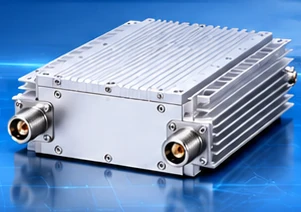
01 / 18–40 GHz feasibility
The present catalogue ends below this requested range. Its documented records include lower-frequency entries such as 1–6 GHz and 4–8 GHz, but none establishes an 18–40 GHz product. Those records therefore remain catalogue context, not substitutes for a higher-frequency module. Frequency overlap at one edge would not prove continuous coverage across the requested interval.
Accordingly, 18–40 GHz should be read as requested scope rather than supplied bandwidth. No model card is matched here, and no frequency or power label is being used to infer a C-UAS application, output capability, suitability or availability. Any future scope decision would depend on current source documentation and written review of the exact item.
02 / 18–40 GHz feasibility
At these frequencies, the useful evidence may sit upstream in a semiconductor data sheet, evaluation document or integrated module record. A device designation is not the same thing as a finished RF amplifier module. Qorvo’s public amplifier catalogue illustrates this distinction by separating power-amplifier products from related technical documents and package resources; a product-family page alone does not supply every mechanical, interface or revision detail needed for procurement review.
Connector language also needs care. A coaxial connector, waveguide test port, transition or evaluation-board interface describes an interface, not automatically a complete amplifier path. For an 18–40 GHz review, the source pack should identify the exact part or revision, stated frequency interval, package or enclosure, RF ports, documentation status and any missing fields. New Ark can keep those items as questions for confirmation rather than filling gaps with assumptions.
03 / 18–40 GHz feasibility
Civilian test documentation can help establish whether a measurement resource covers the requested band, but it does not turn that resource into a product match. Keysight describes external frequency-extension modules used with a vector network analyzer for millimeter-wave S-parameter measurements. Rohde & Schwarz similarly documents converters that extend network-analysis frequency ranges and use waveguide bands. These are instrumentation references for documentation review, not New Ark amplifier offerings.
The distinction matters because a measurement range and a component’s guaranteed operating range answer different questions. A credible review should connect the exact device or module record to an appropriate measurement capability and retain the relevant calibration, port and traceability documentation. It should not publish test settings, drive conditions or operating procedures, and it should not imply that an instrument scope proves performance of an unlisted amplifier.
04 / 18–40 GHz feasibility
A practical civilian review begins with a written requirement: the required frequency interval, acceptable interface form, mechanical constraints and the documentation needed for the intended lawful project. The next check is evidence continuity: does one exact record cover the interval, or are separate devices, transitions or modules being conflated? Missing, conflicting or revision-dependent values should remain visible as confirmation items.
Conformity language also needs a precise boundary. IEC distinguishes a test report from certification and explains that first-party, second-party and independent third-party assessment carry different levels of assurance. A supplier document, laboratory report or accreditation reference therefore supports a particular claim only within its stated scope. The outcome here is a documentation-led feasibility review, not a certification, stock, lead-time or performance conclusion.
SCOPE / NO ASSIGNED MODEL RECORDS
No 18–40 GHz model is documented in the current 22 reference records. This page is a feasibility discussion, not a supplied-module or availability claim.
DOCUMENTATION / READING CONTEXT
Qorvo technical product catalogue
Keysight Technologies technical resource
Rohde & Schwarz product documentation
International Electrotechnical Commission (IEC)
Sources support the topic discussion; they do not independently validate the supplied module records or establish project suitability.
PRODUCT TOPIC / COMMON QUESTIONS
No. The current 22-record catalogue contains no documented 18–40 GHz model, so this page presents the interval as requested feasibility scope rather than a matched product.
No. Records such as 1–6 GHz or 4–8 GHz provide catalogue context only. Frequency proximity or partial overlap does not establish continuous 18–40 GHz coverage, module completeness or suitability.
A connector, waveguide port, transition or frequency-extension converter describes an interface or measurement function. It does not by itself prove a complete amplifier module or its operating performance.
Confirm the exact device or module revision, stated frequency interval, RF interface, package or enclosure information, relevant measurement scope and any missing or conflicting fields. No availability, certification or performance conclusion follows until those records are reviewed.
Continue exploring
Return to the parent category or read another topic in the same group.
RF MODULES / PRODUCT INFORMATION
Open the RF catalogue, download the English Excel workbook or view all 22 independent reference records. Recorded values and revision differences still require confirmation.
07 / CONSULTATION
Choose a contact based on what you need to discuss. All three links open WhatsApp directly—no registration or enquiry form required.
Product-family enquiries, quotations and commercial discussions.
+86 19928199130Message salesModule questions, product documentation and technical clarification.
+86 18123677761Message technical supportA project-specific discussion about mechanical fit, interfaces and support scope.
+85295658748Message the project team