
Reference model 15
Confirmation required- Frequency referenceRecorded
- 1–6 GHz 1–6.2 GHz Revision 2 power claim requires validation
- Bandwidth referenceRecorded
- Bandwidth5 GHz
- Power referenceRecorded
- 100 W
- Transistor technologyRecorded
- GaN
RF MODULES / PRODUCT INFORMATION
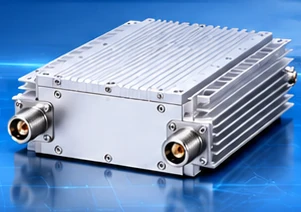
New Ark’s 1–6 GHz page is a focused catalogue reference, not a claim that every RF amplifier spans this interval. In the approved catalogue, reference 15 is the only record that explicitly lists 1–6 GHz; it also records a separate 1–6.2 GHz label, revision 2, a stated 5 GHz bandwidth, 100 W, SMA → N connectors, 1,830 g, GaN, and 250 × 150 × 25 mm dimensions. The baseline flags the power description and several fields for confirmation, so those values remain reference data rather than guaranteed operating results.
01 / 1–6 GHz references
The record describes a broadband frequency interval from 1 GHz to 6 GHz and separately includes a 1–6.2 GHz label. That is useful for catalogue navigation, but it does not by itself establish uniform gain, output power, linearity, or other performance at every point in the interval. A listed 5 GHz bandwidth should also be read as a documentation field, not as proof that every signal condition or installation has been validated.
The catalogue identifies the technology as GaN and lists 100 W, an SMA input to N output, 1,830 g, and 250 × 150 × 25 mm. “Features” is not provided and must be confirmed. The baseline also marks the power claim as requiring validation. Keeping those omissions visible is more useful than filling them with assumptions or treating a nominal label as a complete module datasheet.
02 / 1–6 GHz references
A frequency range describes the interval associated with a device or record. Bandwidth describes a span used in a particular specification context. They are related, but interchangeable wording can hide important gaps. Narrower catalogue records such as 3–6 GHz or 5–6 GHz do not prove uninterrupted 1–6 GHz coverage, so they are not presented here as matches for this page.
Civilian RF documentation commonly reports several electrical characteristics separately. Keysight’s amplifier measurement note identifies S-parameters, frequency bandwidth, and distortion as distinct characteristics. That distinction is why this page preserves reference 15’s fields without converting them into a performance guarantee, test result, or application suitability statement.
03 / 1–6 GHz references
For a civilian design or procurement review, ask for the exact revision of the module document, the meaning of each frequency label, the conditions attached to the 100 W entry, and the missing feature information. Confirm whether the dimensions and connector notation belong to the same revision as the frequency and power entries. These are document-control questions, not instructions for operating an RF chain.
A complete review can also separate a component record from a calibrated bench instrument or a tested system. Keysight’s civilian reference treats amplifier characterization as a set of measured electrical characteristics, while IEC guidance distinguishes product, system, and installation EMC standards. A catalogue label therefore remains a starting point for evidence collection, not proof of certification, system compliance, or suitability for a particular deployment.
04 / 1–6 GHz references
This page is limited to civilian component and product-documentation explanation. It does not describe interference, jamming, electronic warfare, radar deployment, response or evasion, or operating and test settings. Frequency and nominal power alone cannot establish that a model is appropriate for a use case, environment, or regulatory obligation.
Where accredited results matter, identify the applicable laboratory scope and the exact test or calibration service rather than using an amplifier label as a substitute. ILAC explains that accredited bodies are assessed for defined services and that signatory directories identify the scope of recognition. New Ark can use the reference as a structured starting point for written technical review; final claims should follow the controlled source document for the exact item.
SOURCE RECORDS / COMPARISON ONLY
The cards below reproduce the specifically linked supplier reference records. They are not a list of suitable or available products. Reference numbers are not confirmed commercial model codes; every field and applicable revision requires written confirmation.
Units and source notation are retained where stated. An uncertain or missing unit is not inferred.
DOCUMENTATION / READING CONTEXT
Keysight Technologies
International Electrotechnical Commission (IEC/CISPR)
International Laboratory Accreditation Cooperation (ILAC)
Sources support the topic discussion; they do not independently validate the supplied module records or establish project suitability.
PRODUCT TOPIC / COMMON QUESTIONS
No. It is the approved catalogue record that explicitly lists 1–6 GHz, with a separate 1–6.2 GHz label. The baseline flags the power description and missing fields for confirmation, so the record is not a guarantee of uniform performance or availability.
No. A bandwidth field and a frequency-range label describe different documentation concepts. The exact revision and the conditions behind both entries must be confirmed in the controlling module documentation.
Their narrower intervals do not establish uninterrupted coverage from 1 GHz through 6 GHz. This page follows the approved scope and keeps those records separate rather than inferring coverage from partial overlap.
Confirm the exact revision, the meaning of the frequency labels, the conditions attached to the 100 W entry, the unprovided features, and whether the mechanical and connector fields belong to the same record.
Continue exploring
Return to the parent category or read another topic in the same group.
RF MODULES / PRODUCT INFORMATION
Open the RF catalogue, download the English Excel workbook or view all 22 independent reference records. Recorded values and revision differences still require confirmation.
07 / CONSULTATION
Choose a contact based on what you need to discuss. All three links open WhatsApp directly—no registration or enquiry form required.
Product-family enquiries, quotations and commercial discussions.
+86 19928199130Message salesModule questions, product documentation and technical clarification.
+86 18123677761Message technical supportA project-specific discussion about mechanical fit, interfaces and support scope.
+85295658748Message the project team