
RF MODULES / PRODUCT INFORMATION / 03
GaN and LDMOS: Two Paths to RF Amplification
A semiconductor name is a starting point, not a module selection. For civilian communications, laboratory equipment and industrial research, consider the technology alongside the amplifier’s role, physical assembly and the information needed to review your project.
01 / Technology
GaN: A compound-semiconductor design path
GaN means gallium nitride, a compound-semiconductor technology used in RF power devices. It is often considered when compact RF power stages and broadband design are important to an equipment concept. In New Ark’s RF amplifier category, the term describes a transistor technology within the amplification stage, rather than a complete instrument.
For a GaN discussion, explain what the host equipment does and where amplification belongs within it. Keep the intended signal, packaging and wider equipment requirements in view. The useful outcome is a review of a specific module design; the GaN label alone cannot establish that an assembly is suitable for your project.
02 / Technology
LDMOS: An established silicon technology
LDMOS stands for laterally diffused metal-oxide-semiconductor. This silicon transistor technology has a long-established role in RF amplification and provides another design path for communications equipment and other RF systems. Its name identifies the device technology, not the enclosure format, connection arrangement or support included with a finished module.
An LDMOS review can begin with the existing equipment architecture and the priorities of the engineering team. Describe whether the module is being considered for a communications platform, laboratory assembly or industrial research prototype. This context keeps the comparison focused on the equipment rather than treating a technology’s familiarity as proof of project fit.
03 / Technology
The complete module matters
An RF power amplifier increases the power of an incoming radio-frequency signal using an external electrical supply. It is therefore active, not passive. Module-level packaging brings that amplification stage into a physical assembly for larger equipment; it does not turn the amplifier into a standalone communications system or laboratory instrument.
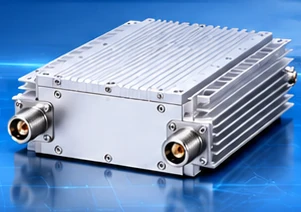
Look beyond the transistor name to enclosure layout, connection access and the boundary between the module and its host. These are separate integration questions. A photograph can illustrate an assembly’s physical format, but it cannot establish its internal technology or suitability. Base a product discussion on module-specific information rather than appearance alone.
04 / Technology
Turn a technology discussion into a written scope
Prepare a concise account of the civilian application, the amplifier’s role and the mechanical or interface questions that remain open. Identify the documentation your engineering and purchasing teams need, such as assembly information and technical clarification records. Ask which documents relate to the proposed assembly rather than assuming category-level descriptions apply unchanged.
Use the review to distinguish confirmed arrangements from questions still awaiting agreement. Record the selected technology path, enclosure and interface arrangements, integration responsibilities and agreed support in the written project scope. This gives engineering and purchasing a shared reference and keeps a preliminary conversation from being mistaken for a finalized configuration.
06 / COMMON QUESTIONS
Questions about this topic
Is GaN always preferable to LDMOS?
No. The two technologies are not a universal ranking. Compare complete module designs against the intended application and equipment context, rather than choosing solely by the semiconductor name.
Does broadband mean one module suits every RF application?
No. Broadband describes an amplification approach within a module’s intended operating range. It does not establish universal suitability or remove the need to review a particular assembly for your equipment.
Must I choose a technology before starting a discussion?
No. You can begin with the civilian use case and integration questions. Present GaN or LDMOS as a question for review if the technology path has not yet been agreed.
Who should I contact for technology clarification?
Contact New Ark technical support on WhatsApp at +8618123677761 for module questions and documentation clarification. Explain the equipment context and identify the assembly being discussed so the enquiry stays focused.