
RF MODULES / PRODUCT INFORMATION / 04
RF Amplification for Civilian Equipment and Research
From connected equipment to the research bench, an RF amplifier module serves a defined role within a larger assembly. Start with the purpose of that assembly, then review the module in its application context.
01 / Applications
Communications equipment and wireless development
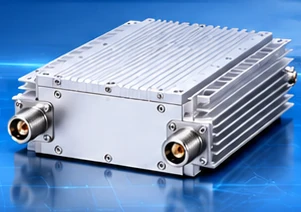
In civilian communications equipment and wireless development platforms, an RF amplifier module can form one stage of a transmit chain. It works alongside the equipment’s other signal-handling components rather than replacing the complete communications system. The useful starting point is a clear description of the module’s intended role.
For an equipment review, identify the boundaries between the amplifier and the surrounding assembly. Enclosure layout, connection access and interface expectations give engineering and purchasing teams concrete questions to discuss together. Request module-specific documentation for that review; a familiar application category alone does not establish suitability for your equipment.
02 / Applications
Laboratory sources, experiments and equipment evaluation
Laboratory work can involve amplifying a signal source for RF experiments or equipment evaluation. In this context, the amplifier belongs within the laboratory’s complete measurement setup and test plan. A packaged module is an amplification stage, not a standalone instrument that defines the experiment or interprets its results.
Describe the evaluation objective and the information your team needs to assess the amplifier’s place in the setup. Separate questions about the module from questions about the laboratory’s other equipment. This helps focus the documentation discussion on the specific assembly under review, while keeping responsibility for the overall measurement plan with the laboratory.
03 / Applications
Industrial instrumentation research and prototypes
Industrial research teams may consider RF amplification as part of an instrumentation concept or prototype equipment. Module-level packaging provides a physical assembly to review alongside the wider mechanical and electronic design. The discussion should connect the research purpose with the space, interface access and assembly context of the host equipment.
Prototype projects also benefit from distinguishing open design questions from agreed requirements. Record which enclosure and interface arrangements need review, what product information is needed, and which support responsibilities remain to be discussed. Product-family photographs can introduce physical formats, but they do not confirm a particular configuration or establish its fit for the prototype.
04 / Applications
From an application brief to a written scope
A useful application brief explains what the civilian equipment does, why it needs an RF amplification stage and which integration questions require clarification. Bring engineering and purchasing priorities into the same discussion: mechanical fit, interface arrangements, documentation needs and the boundaries of the requested module assembly should be understandable to both teams.
Use that brief to agree what needs further review with New Ark. Keep proposed arrangements distinct from confirmed commitments, particularly when discussing customization or support. The selected assembly, enclosure and interface details, documentation and cooperation responsibilities belong in a written project scope, so the application description leads to a defined discussion rather than an assumed product match.
06 / COMMON QUESTIONS
Questions about this topic
Does an application category confirm which module I should use?
No. Communications, laboratory testing and industrial research describe use contexts, not a selection rule. A specific module still needs review against the host equipment and its documented requirements.
Can an enclosed amplifier replace a complete laboratory instrument?
No. The enclosure packages the amplification stage. The laboratory’s signal source, surrounding equipment and measurement plan remain separate parts of the complete setup.
Does GaN or LDMOS determine the application?
Neither technology label establishes application fit on its own. GaN and LDMOS are different transistor technology paths; review the complete module in the context of your equipment and project priorities.
What should be confirmed before an application discussion becomes a project?
Confirm the module’s role, the assembly being considered, unresolved interface and packaging questions, and the documentation and support requested. Record the agreed arrangements and responsibilities in the written project scope.