
01 / WhatsApp
Sales enquiries
Product-family enquiries, quotations and commercial discussions.
+86 19928199130Message salesRF MODULES / PRODUCT INFORMATION
New Ark’s RF catalogue can support an early documentation review for civilian laboratory and bench-test projects. The records below are component or module references, not calibrated instruments, accredited laboratories, or application-matched test systems.
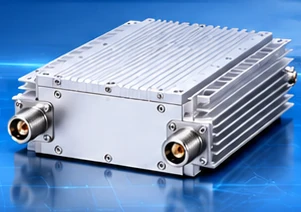
01 / RF test and measurement
A broadband RF amplifier module is one element in a signal path. A calibrated bench instrument is a complete measurement product with its own metrology, interfaces, software or controls, and service documentation. A module’s frequency, bandwidth, nominal power, connector, dimensions, or GaN/LDMOS label therefore cannot by itself establish measurement accuracy, repeatability, or suitability for a particular test.
The catalogue preserves the supplied records rather than turning them into test-system promises. For example, reference 01 records 5–6 GHz, 1 GHz bandwidth, 10–30 W, SMA → SMA, 273 g, and 132 × 53 × 18 mm. Other entries span different ranges and power labels. These are comparison fields for review; they are not operating instructions, measured results, or a claim that any model matches an application by frequency alone.
02 / RF test and measurement
A responsible review connects the amplifier record to the surrounding measurement chain: the instrument used to generate or observe a signal, cables and adapters, reference planes, calibration standards, and the record format for results. Rohde & Schwarz explains that measurement calibration corrects systematic errors in the measurement system, while instrument calibration verifies that an instrument functions within specification. Those are related but distinct documents and responsibilities.
For a New Ark project discussion, request the exact module revision and the evidence relevant to the intended civilian bench context, such as a datasheet, interface definition, applicable uncertainty information, and any stated test conditions. Do not fill gaps with assumptions about waveform, drive level, power-on sequence, firmware, interlocks, or performance. If a field is missing or conflicting in the catalogue, it remains “confirm” rather than becoming a specification.
03 / RF test and measurement
Keysight describes RF measurement traceability as an unbroken link from working measurements to higher-order standards, with uncertainty contributions and correction factors maintained through the chain. That makes calibration certificates, reference-standard identity, dates, uncertainty statements, and controlled records meaningful review items. A connector type or nominal wattage is not a substitute for that evidence.
The same discipline helps separate a component quotation from a defensible laboratory record. Keep the module identity, revision, and supplied values alongside the instrument and calibration documentation used for a specific result. New Ark can discuss which documents are available for review, but this page does not assert a traceable measurement outcome, a calibrated module, or a guaranteed result.
04 / RF test and measurement
ISO/IEC 17025:2017 sets general requirements for the competence, impartiality, and consistent operation of testing and calibration laboratories. ILAC’s policy material separately describes accreditation scope and metrological traceability within its mutual-recognition framework. These references concern the laboratory or conformity-assessment body and the work covered by its scope; they do not turn an RF amplifier module into an accredited test instrument.
When a project needs formal evidence, compare the proposed laboratory’s published scope and report language with the actual measurement being requested. Keep standards-specific compliance, EMC conclusions, and system suitability out of a component label unless the responsible laboratory or instrument documentation explicitly supports them. Unsupported bands in the catalogue remain requested feasibility scope, not supplied modules or matches.
SCOPE / NO ASSIGNED MODEL RECORDS
No model shortlist is assigned to this application topic. An application context does not establish that any reference is suitable for the equipment.
DOCUMENTATION / READING CONTEXT
Keysight Technologies
Rohde & Schwarz
International Electrotechnical Commission
International Laboratory Accreditation Cooperation
Sources support the topic discussion; they do not independently validate the supplied module records or establish project suitability.
PRODUCT TOPIC / COMMON QUESTIONS
No. It is component or signal-path hardware. Calibration status, uncertainty, and complete instrument performance require separate instrument and measurement-chain documentation.
No. Frequency is only one comparison field. Interfaces, revision, measurement architecture, documented conditions, uncertainty, and the responsible laboratory or instrument must be reviewed without inferring an application match.
It connects a working measurement to higher-order standards through documented calibrations, uncertainty contributions, correction information, and controlled records. A nominal power label alone is not traceability evidence.
No. ISO/IEC 17025 concerns laboratory competence, impartiality, and consistent operation. The relevant accreditation scope applies to the laboratory’s covered activities, not automatically to a component.
Continue exploring
Return to the parent category or read another topic in the same group.
RF MODULES / PRODUCT INFORMATION
Open the RF catalogue, download the English Excel workbook or view all 22 independent reference records. Recorded values and revision differences still require confirmation.
07 / CONSULTATION
Choose a contact based on what you need to discuss. All three links open WhatsApp directly—no registration or enquiry form required.
Product-family enquiries, quotations and commercial discussions.
+86 19928199130Message salesModule questions, product documentation and technical clarification.
+86 18123677761Message technical supportA project-specific discussion about mechanical fit, interfaces and support scope.
+85295658748Message the project team