
Skip to product topic
NEW ARKRF AMPLIFIER MODULES
Navigation

RF MODULES / PRODUCT INFORMATION

RF Power Amplifier Modules: Assembly and Integration Options

An RF power amplifier module is an assembly-level component, not automatically a calibrated instrument or a complete certified radio. New Ark’s catalogue preserves 22 reference records for civilian documentation review; each record still requires written confirmation of the applicable revision and scope.
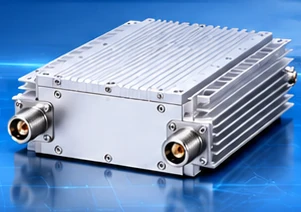
Category reference photo — not a verified image of this model
RF amplifier module category reference photograph
A closer look at the module form factor.Enclosure and interface arrangements vary across the family.

01 / RF amplifier modules

Module scope and assembly responsibility

A module packages more of the amplifier function than a bare transistor or discrete board. Depending on the documented design, it may combine amplification stages, matching, connectors and a mechanical enclosure. That integration can simplify a system review, but it does not by itself establish a finished instrument, a radio approval, or a measured result in a customer’s enclosure.

The integration boundary should therefore be explicit. Review the RF interface, mechanical envelope, thermal interface, protection information and any required external functions as separate evidence. NXP’s RF data-sheet guidance describes module selection in relation to frequency, output power, gain, supply and form factor, while Qorvo explains that a power amplifier module integrates PA circuitry into a packaged component. Neither source turns a generic module label into a suitability guarantee.

02 / RF amplifier modules

What the 22-record catalogue preserves

The catalogue is a reference set, not 22 certified or in-stock standard models. Records include 01 (5–6 GHz, 10–30 W), 02 (1.2/1.5/2.4 GHz, 50 W), 03 (3–6 GHz entries, 50 W), 04 (100–1000 MHz, 100 W), 05 (1–3 GHz, 100 W), 06 (4–6 GHz, 100 W, conflicting band and bandwidth), 07 (conflicting frequency and bandwidth), 08 (100–1000 MHz and 1–3 GHz, revision 2), 09 (3–6 GHz, 30–40 W), 10 (100 MHz–2.4 GHz, 50 W), 11 (conflicting 2–6/3–6 GHz, bandwidth and power), and 12 (300 MHz–2 GHz, revision 2, 100 W).

The remaining records are 13 (notation requiring confirmation), 14 (1–2 GHz, 80 W), 15 (1–6/1–6.2 GHz, revision 2; power claim requires validation), 16 (4–8 GHz, revision 2; weight and dimensions conflict), 17 (1–3 GHz, 50 W), 18 (conflicting 1–6.4/500 MHz–7.3 GHz and 10/20 W variants), 19 (4–8 GHz, 100 W; connector conflict), 20 (2–7.2 GHz, 50 W; connector conflict and weight missing), 21 (2–7.2 GHz, 100 W), and 22 (100–400 notation, bandwidth and power conflict). Missing values remain “not provided—confirm”; a revision label is not proof of a new semiconductor class.

03 / RF amplifier modules

Interfaces, enclosure and review documents

A practical assembly review compares the record’s stated connector and dimensions with the host equipment’s mechanical drawing. The baseline includes SMA→SMA, SMA→N and N entries, plus dimensions and weights where supplied. Records with conflicting connectors, dimensions or weights should remain unresolved until the applicable source revision is identified; a nominal power value is not a linear continuous-output promise across every condition.

For civilian laboratory or equipment documentation, keep the module record separate from the measurement record. Keysight’s public PA material describes calibrated signal generation and analysis for performance verification, while ILAC’s guidance explains that an accreditation scope describes the services for which a conformity-assessment body has demonstrated competence. A module listing is therefore not an accredited report, calibration certificate or standards-specific conformity statement.

04 / RF amplifier modules

Requested bands and written feasibility review

The approved catalogue does not contain a complete 2–8 GHz match. Records 20 and 21 stop at 7.2 GHz, and records 16 and 19 cover 4–8 GHz; they are comparison records with partial overlap, not proof of uninterrupted 2–8 GHz coverage. The same discipline applies to 6–18 GHz and 18–40 GHz: neither is a matched catalogue product here, so either is a requested feasibility scope requiring source-specific documentation and engineering review.

Do not infer application matching from frequency or power alone. Before a civilian integration decision, request the applicable revision, complete interface and mechanical data, stated operating boundaries, thermal assumptions, and the evidence package relevant to the host equipment. This page intentionally makes no claim about stock, lead time, certification, customer use, factory status or guaranteed performance.

SOURCE RECORDS / COMPARISON ONLY

Compare supplied reference records

The cards below reproduce the specifically linked supplier reference records. They are not a list of suitable or available products. Reference numbers are not confirmed commercial model codes; every field and applicable revision requires written confirmation.

Units and source notation are retained where stated. An uncertain or missing unit is not inferred.

Reference model 01

Recorded fields
Frequency referenceRecorded
5–6 GHz
Bandwidth referenceRecorded
1 GHz
Power referenceRecorded
10-30 W
Transistor technologyRecorded
GaN
View model details

Reference model 02

Recorded fields
Frequency referenceRecorded
1.2 GHz 1.5 GHz 2.4 GHz
Bandwidth referenceRecorded
Lower-band bandwidth200 MHz (e.g.700–900 MHz) Upper-band bandwidth300 MHz (e.g.2–2.3 GHz)
Power referenceRecorded
50 W
Transistor technologyRecorded
LDMOS
View model details

Reference model 03

Confirmation required
Frequency referenceRecorded
3–4 GHz 4–5 GHz 5–6 GHz 3–6 GHz
Bandwidth referenceRecorded
Bandwidth1 GHz Bandwidth3 GHz
Power referenceRecorded
50 W
Transistor technologyRecorded
GaN
View model details

Reference model 04

Recorded fields
Frequency referenceRecorded
100–1000 MHz
Bandwidth referenceRecorded
Bandwidth1 GHz
Power referenceRecorded
100 W
Transistor technologyRecorded
LDMOS (new revision)
View model details

Reference model 05

Recorded fields
Frequency referenceRecorded
1–2 GHz 2–3 GHz 1–3 GHz
Bandwidth referenceRecorded
Bandwidth1 GHz Bandwidth3 GHz
Power referenceRecorded
100 W
Transistor technologyRecorded
GaN
View model details

Reference model 06

Confirmation required
Frequency referenceConflicting records
Conflicting records — confirm
Summary record
4–6 GHz
Individual record
4–6.3 GHz
Bandwidth referenceConflicting records
Conflicting records — confirm
Summary record
200 MHz
Individual record
Lower-band bandwidth500 MHz e.g. (4–4.5 GHz 4.5–5 GHz) Upper-band bandwidth1 GHz e.g. (5–6 GHz)
Power referenceRecorded
100 W
Transistor technologyRecorded
GaN
View model details

Reference model 07

Confirmation required
Frequency referenceConflicting records
Conflicting records — confirm
Summary record
400-1000-2000
Individual record
100–1000 MHz 1–3 GHz Revision 1
Bandwidth referenceConflicting records
Conflicting records — confirm
Summary record
500 MHz
Individual record
Bandwidth1 GHz e.g. 100–1000 MHz 1–2 GHz 2–3 GHz
Power referenceRecorded
30 W
Transistor technologyRecorded
GaN
View model details

Reference model 08

Confirmation required
Frequency referenceRecorded
100–1000 MHz 1–3 GHz Revision 2
Bandwidth referenceNotation / version unclear
Notation requires confirmation
Summary record
100-1000-30 W, 1000-3000-20-30 W
Individual record
100-1000-30 W, 1000-3000-20-30 W
Power referenceRecorded
30 W
Transistor technologyRecorded
GaN
View model details

Reference model 09

Confirmation required
Frequency referenceRecorded
3–6 GHz
Bandwidth referenceRecorded
1 GHz / 2 GHz / 3 GHz
Power referenceRecorded
30-40 W
Transistor technologyRecorded
GaN
View model details

Reference model 10

Recorded fields
Frequency referenceRecorded
100 MHz-2.4 GHz
Bandwidth referenceRecorded
Bandwidth300–400 MHz
Power referenceRecorded
50 W
Transistor technologyRecorded
GaN
View model details

Reference model 11

Confirmation required
Frequency referenceConflicting records
Conflicting records — confirm
Summary record
2–6 GHzRevision 1
Individual record
3–6 GHz
Bandwidth referenceConflicting records
Conflicting records — confirm
Summary record
4 GHz
Individual record
3 GHz
Power referenceConflicting records
Conflicting records — confirm
Summary record
50/100 W
Individual record
100 W
Transistor technologyRecorded
GaN
View model details

Reference model 12

Confirmation required
Frequency referenceRecorded
300 MHz-2 GHz Revision 2
Bandwidth referenceRecorded
1.7 GHz
Power referenceRecorded
100 W
Transistor technologyRecorded
GaN
View model details

Reference model 13

Confirmation required
Frequency referenceNotation / version unclear
Notation requires confirmation
Summary record
100–1 GHz
Individual record
100–1 GHz
Bandwidth referenceRecorded
900 MHz
Power referenceConflicting records
Conflicting records — confirm
Summary record
100 W
Individual record
50-100 W
Transistor technologyRecorded
GaN
View model details

Reference model 14

Confirmation required
Frequency referenceRecorded
1–2 GHz
Bandwidth referenceRecorded
Bandwidth1 GHz
Power referenceRecorded
80 W
Transistor technologyRecorded
GaN
View model details

Reference model 15

Confirmation required
Frequency referenceRecorded
1–6 GHz 1–6.2 GHz Revision 2 power claim requires validation
Bandwidth referenceRecorded
Bandwidth5 GHz
Power referenceRecorded
100 W
Transistor technologyRecorded
GaN
View model details

Reference model 16

Confirmation required
Frequency referenceRecorded
4–8 GHz Revision 2
Bandwidth referenceRecorded
4 GHz
Power referenceRecorded
50 W
Weight referenceConflicting records
Conflicting records — confirm
Summary record
770 g
Individual record
439 g
Transistor technologyRecorded
GaN
Dimensions referenceConflicting records
Conflicting records — confirm
Summary record
180 × 100 × 20 mm
Individual record
134 × 80 × 22 mm
View model details

Reference model 17

Confirmation required
Frequency referenceRecorded
1–3 GHz
Bandwidth referenceRecorded
2 GHz
Power referenceRecorded
50 W
Transistor technologyRecorded
GaN
View model details

Reference model 18

Confirmation required
Frequency referenceConflicting records
Conflicting records — confirm
Summary record
1–6.4 GHz 500–7.3 GHz
Individual record
1–6.4 GHz 500 MHz-7.3 GHz
Bandwidth referenceNot provided
Not provided — confirm
Power referenceNotation / version unclear
Variant rating requires confirmation
Summary record
10 W
Individual record
10 W / 20 W variants mentioned; confirm the applicable record
Transistor technologyRecorded
GaN
View model details

Reference model 19

Confirmation required
Frequency referenceRecorded
4–8 GHz
Bandwidth referenceRecorded
4 GHz
Power referenceRecorded
100 W
RF connectorConflicting records
Conflicting records — confirm
Summary record
SMA → SMA
Individual record
SMA → SMA/N
Transistor technologyRecorded
GaN
View model details

Reference model 20

Confirmation required
Frequency referenceRecorded
2–7.2 GHz
Bandwidth referenceRecorded
5.2 GHz
Power referenceRecorded
50 W
RF connectorConflicting records
Conflicting records — confirm
Summary record
SMA → SMA
Individual record
SMA → N
Transistor technologyRecorded
GaN
View model details

Reference model 21

Recorded fields
Frequency referenceRecorded
2–7.2 GHz
Bandwidth referenceRecorded
5.2 GHz
Power referenceRecorded
100 W
Transistor technologyRecorded
GaN
View model details

Reference model 22

Confirmation required
Frequency referenceNotation / version unclear
Notation requires confirmation
Summary record
100-400
Individual record
100-400
Bandwidth referenceConflicting records
Conflicting records — confirm
Summary record
400 MHz
Individual record
400
Power referenceConflicting records
Conflicting records — confirm
Summary record
150 W
Individual record
200 W
Other functionsConflicting records
Conflicting records — confirm
Summary record
None listed
Individual record
Thermal control
Transistor technologyRecorded
GaN
View model details

DOCUMENTATION / READING CONTEXT

Sources and attributions

  1. Understanding RF Data Sheet Parameters

    NXP Semiconductors application-note archive

  2. Power Amplifier Modules and Their Role in 5G Design

    Qorvo technical article

  3. How to Test Power Amplifiers with Modulated Signals

    Keysight Technologies civilian measurement documentation

  4. ILAC G18: Guideline for describing Scopes of Accreditation

    International Laboratory Accreditation Cooperation

Sources support the topic discussion; they do not independently validate the supplied module records or establish project suitability.

PRODUCT TOPIC / COMMON QUESTIONS

Questions about this topic

Is an RF power amplifier module the same as a complete RF instrument?

No. It is an assembly-level component. A complete instrument or radio adds its own controls, power architecture, enclosure, measurement evidence and any applicable approval work.

Does the catalogue contain 22 certified standard models?

No. It preserves 22 reference records for review. Several records contain missing, unclear or conflicting values that must be confirmed against the applicable revision.

Does a 2–7.2 GHz record satisfy a requested 2–8 GHz band?

No. It is a narrower comparison record. A 2–8 GHz request remains a written feasibility scope rather than a matched catalogue product.

What should be requested before civilian equipment integration?

Request the applicable revision, interface and mechanical drawings, complete stated limits, thermal and protection information, and the relevant product or laboratory documentation.

RF MODULES / PRODUCT INFORMATION

Catalogue and reference files

Open the RF catalogue, download the English Excel workbook or view all 22 independent reference records. Recorded values and revision differences still require confirmation.

07 / CONSULTATION

The right conversation, with the right team.

Choose a contact based on what you need to discuss. All three links open WhatsApp directly—no registration or enquiry form required.

View all contact options