
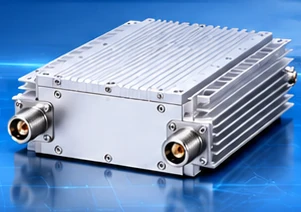
Reference model 04
Recorded fields- Frequency referenceRecorded
- 100–1000 MHz
- Bandwidth referenceRecorded
- Bandwidth1 GHz
- Power referenceRecorded
- 100 W
- Transistor technologyRecorded
- LDMOS (new revision)
RF MODULES / PRODUCT INFORMATION
New Ark’s 100 W RF power amplifier reference group brings together documented catalogue records whose power field is labelled 100 W. It is a comparison page for civilian component and product-documentation review, not a statement that every record is a complete, validated module or a currently available item. Frequency, bandwidth, interface, thermal design and intended signal conditions remain record-specific.
01 / 100 W references
Here, 100 W is a catalogue grouping, not a guaranteed continuous-wave, modulated-signal or measured output result. A power label does not establish gain, linearity, efficiency, duty cycle, ruggedness, thermal margin or suitability for a particular civilian system. NXP’s RFPA documentation illustrates why thermal and electrical evidence is reported for a specific device and test context, with separate treatment for GaN and LDMOS.
The group also mixes different frequency intervals and package records. A band shown on a reference card should be read as that card’s documented interval, not as proof of uninterrupted performance across another band or of a finished instrument. New Ark therefore keeps the records together for review while leaving application matching, operating conditions and final acceptance to the responsible engineering and procurement teams.
02 / 100 W references
Reference 04 is listed as 100–1000 MHz, 1 GHz bandwidth, LDMOS (new revision), SMA → N, 1020 g and 175.5 × 100 × 24 mm. Reference 05 is listed as 1–2 GHz, 2–3 GHz and 1–3 GHz, with 1 GHz and 3 GHz bandwidth entries, GaN, SMA → N, 1048 g and 200.5 × 105 × 24 mm. Reference 12 is listed as 300 MHz–2 GHz, Revision 2, 1.7 GHz bandwidth, GaN and SMA → N; features and weight are not provided and should be confirmed.
Reference 06 is a GaN record with a 100 W label, but its frequency is conflicting (4–6 GHz versus 4–6.3 GHz) and its bandwidth is conflicting (200 MHz versus the more detailed lower- and upper-band entries); both require confirmation. Reference 15 lists GaN, Revision 2, 1–6 GHz and 1–6.2 GHz, 5 GHz bandwidth, SMA → N, 1830 g and 250 × 150 × 25 mm, while its power claim requires validation and features are not provided. Reference 19 lists 4–8 GHz, 4 GHz bandwidth, GaN, 1193 g and 160 × 160 × 25 mm; its connector conflicts between SMA → SMA and SMA → SMA/N. Reference 21 lists 2–7.2 GHz, 5.2 GHz bandwidth, GaN, SMA → SMA, 2569 g and 240 × 220 × 25 mm.
03 / 100 W references
A reference card is not the same thing as a calibrated bench instrument, a certified communications product or a complete system. Connector notation describes the recorded interface only. The absence of a listed circulator or feature means “not listed” in this catalogue; it does not prove that an internal protection, control or thermal function is absent. Missing fields should be resolved from the applicable revision and supplier documents rather than filled by inference.
Civilian test documentation commonly separates the device under test from the measurement chain. Keysight describes power-amplifier characterization as an application involving analyzers and signal sources, while Rohde & Schwarz presents RF component testing as a way to characterize and compare amplifier behaviour. Those references support a documentation workflow, not a performance conclusion for any New Ark record.
04 / 100 W references
Before a record is carried into a civilian design review, request the exact revision, complete frequency and bandwidth definition, power-condition definition, gain and linearity data, thermal information, mechanical drawing, connector configuration and any applicable conformity documents. A stated 100 W value should be reconciled with the signal type, duty conditions and measurement basis in the source document.
Accreditation language also needs precision. ILAC explains that accreditation evaluates conformity-assessment bodies for specific activities and competence; it is not a blanket endorsement of every product claim. This page consequently makes no manufacturer, factory, certification, stock, customer or lead-time assertion. Bands outside the documented records—such as an assumed 6–18 GHz or 18–40 GHz match—are not supplied modules here and would require a separate written feasibility review.
SOURCE RECORDS / COMPARISON ONLY
The cards below reproduce the specifically linked supplier reference records. They are not a list of suitable or available products. Reference numbers are not confirmed commercial model codes; every field and applicable revision requires written confirmation.
Units and source notation are retained where stated. An uncertain or missing unit is not inferred.
DOCUMENTATION / READING CONTEXT
NXP Semiconductors, AN1955 Rev. 2
Keysight Technologies, product and technical-support documentation
Rohde & Schwarz, RF component testing knowledge resource
International Laboratory Accreditation Cooperation (ILAC)
Sources support the topic discussion; they do not independently validate the supplied module records or establish project suitability.
PRODUCT TOPIC / COMMON QUESTIONS
No. 100 W is the provided catalogue label for this reference group. Output conditions, waveform, duty cycle, gain, linearity, thermal limits and validation basis are not established uniformly and must be confirmed for the exact record and revision.
Reference 06 has conflicting 4–6 GHz and 4–6.3 GHz entries plus conflicting bandwidth descriptions. Reference 19 has conflicting connector entries, SMA → SMA versus SMA → SMA/N. Reference 15 also carries a note that its power claim requires validation.
No. They are separate documented intervals with different catalogue records, interfaces, dimensions and weights. Frequency overlap alone does not establish interchangeability, application suitability or equal performance.
The catalogue records are presented as RF amplifier reference records. They are not represented here as calibrated instruments, certified systems or application-matched products; applicable documentation and acceptance evidence must be reviewed separately.
Continue exploring
Return to the parent category or read another topic in the same group.
RF MODULES / PRODUCT INFORMATION
Open the RF catalogue, download the English Excel workbook or view all 22 independent reference records. Recorded values and revision differences still require confirmation.
07 / CONSULTATION
Choose a contact based on what you need to discuss. All three links open WhatsApp directly—no registration or enquiry form required.
Product-family enquiries, quotations and commercial discussions.
+86 19928199130Message salesModule questions, product documentation and technical clarification.
+86 18123677761Message technical supportA project-specific discussion about mechanical fit, interfaces and support scope.
+85295658748Message the project team