
BLOG / EXTENDED TECHNICAL GUIDE 102
Drone Detection for Pipelines: Acoustic, RF and Multi-Sensor Approaches
A public, project-level educational guide for pipeline owners and stakeholders that explains how acoustic, RF, radar, EO/IR and fusion can serve conditional information roles in a drone-detection program. It distinguishes sensing from response, emphasizes uncertainty-aware interpretation and responsible human review, and gives readers a governance-minded framework for lawful, safe evaluation rather than a deployment playbook.
INFORMATION & PROJECT-GOVERNANCE CONTEXT / CONCEPTUAL SCENE
Put technology questions back into an authorised, reviewable, and verifiable project context.
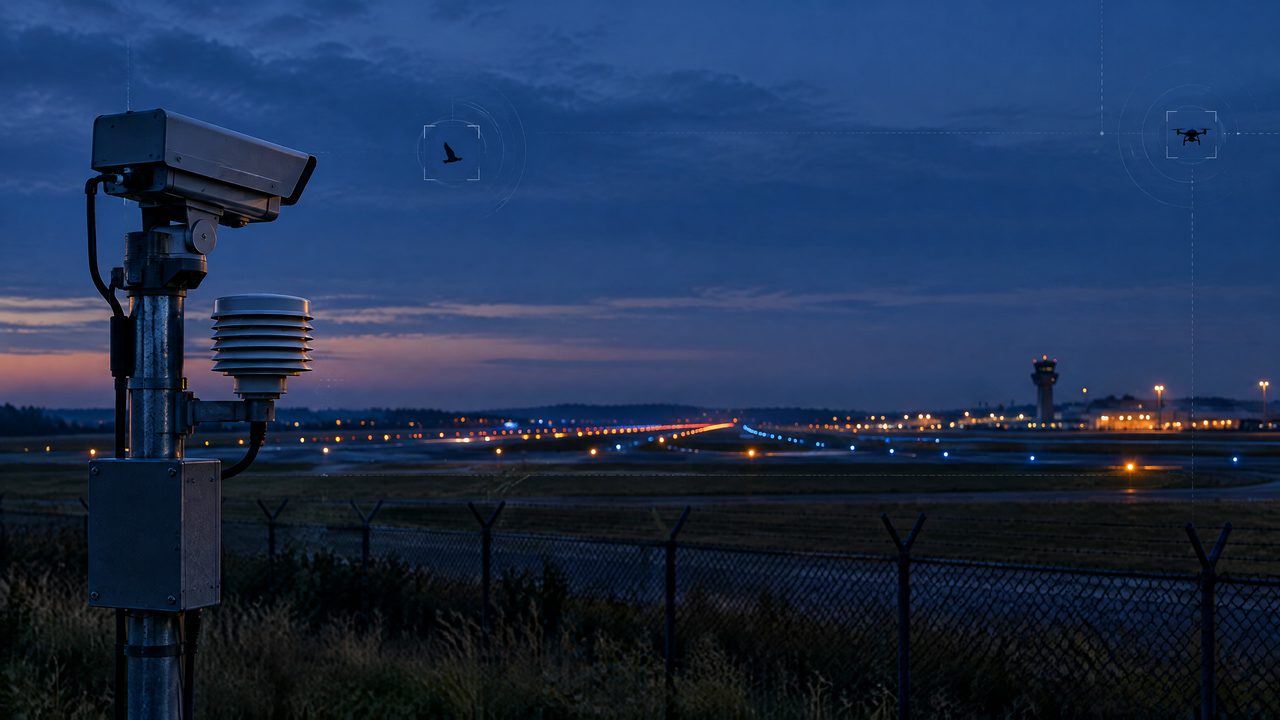
This conceptual scene helps explain conditional information, protected services, human review, and written validation. It is not a deployment or field-outcome claim.
BLOG SUMMARY
Why pipeline drone detection is a layered assurance question
A public, project-level educational guide for pipeline owners and stakeholders that explains how acoustic, RF, radar, EO/IR and fusion can serve conditional information roles in a drone-detection program. It distinguishes sensing from response, emphasizes uncertainty-aware interpretation and responsible human review, and gives readers a governance-minded framework for lawful, safe evaluation rather than a deployment playbook.
TERMS IN THIS GUIDE
Hover, focus, or tap a term for a bounded definition. Each definition links to the terminology reference.
INFORMATION CONTEXT / 01
Why pipeline drone detection is a layered assurance question
explain the difference between an observed cue, an assessed concern and a verified event, while keeping asset context, privacy and uncertainty central.
CONDITIONS & UNCERTAINTY / 02
Conditional roles of acoustic, RF, radar and EO/IR
compare what each modality may contribute, where it may be ambiguous or unavailable, and why no single sensor should be treated as conclusive; avoid specifications, ranges, signals and performance claims.
CORROBORATION / 03
Fusion, human review and written validation
present fusion as contextual corroboration, with documented assumptions, lawful authority, protected services, safety offsets and written validation by accountable reviewers—not automated decisions or fixed thresholds.
GOVERNANCE & VALIDATION / 04
Responsible project governance and procurement
outline questions about lawful scope, data handling, interference avoidance, accessibility, vendor transparency and staged validation, while clearly separating detection information from any intervention, interception or response method.
TECHNICAL & COMPLIANCE BOUNDARY / 05
This guide is an educational project reference—not an operating, deployment, integration, or performance instruction.
01Availability and interpretation of acoustic, RF, radar, EO/IR, visual, and other information depend on site conditions, environment, data quality, protected services, permissions, privacy, and accountable review. This page does not promise detection, identification, classification, location assessment, tracking, availability, safety, non-interference, or risk outcomes.
02Any equipment, interface, data handling, industrial-system connection, spectrum-related arrangement, aviation coordination, or later project decision requires appropriate authority, engineering review, qualified personnel, and written scope.
03The public guide does not provide target selection, sensor positioning, thresholds, algorithms, execution sequences, signal control, interference, navigation manipulation, or response methods.
BLOG FAQ / 102
Frequently asked questions on Drone Detection for Pipelines: Acoustic, RF and Multi-Sensor Approaches .
These answers support bounded, project-level discussion. They are not an operating, deployment, integration, or field-outcome instruction.
RECORDEXTENDED TECHNICAL GUIDE / GOVERNED INFORMATION FAQ
NEXT STEP / PROJECT PATH
Discuss PCBA delivery and custom-project conditions.
From sensing modules to system integration, interfaces, environmental fit, certification, and documentation scope belong in a written project definition.
CONTINUE THE READING
CONTENT DISTRIBUTION / SHARE
Share this reviewed project release.
Opens the platform share interface in a new window.
Review the full ARC-PERIMETER perimeter solution.
A consolidated reference from microphone-array networking to layered perimeters and project validation.
How C-UAS Technology Supports Security Operations at Critical Infrastructure Sites
An educational, project-level guide for New Ark C-UAS readers that explains how counter-uncrewed-aircraft-system (C-UAS) technology can inform security operations at critical infrastructure sites without prescribing deployment or response procedures. It presents acoustic, RF, radar, EO/IR, and fusion as conditional information roles within a broader governance process, emphasizing context, uncertainty, responsible human review, lawful authority, protected services, safety offsets, and written validation.
Designing a Drone Detection Network for Large-Scale Industrial Facilities
A public, project-level educational guide that explains how facility stakeholders can frame requirements, governance, information roles, and validation for a layered drone-detection network—without turning the article into a deployment manual or a promise of detection performance. Acoustic, RF, radar, EO/IR, and fusion are presented only as conditional sources of information whose suitability depends on the site, environment, lawful purpose, and review process. The New Ark C-UAS perspective is practical and systems-oriented: align stakeholders, document constraints, preserve human accountability, and validate claims in writing before relying on them.