
INDUSTRY UPDATE / RECORD 22
Global C-UAS pressure signals:
keep distinct records distinct.
Public records from the Middle East, South Asia, and Europe show that counter-UAS questions appear across very different security, legal, and operational settings. A CENTCOM training release, an Indian parliamentary record on border incidents, and a Reuters-reported Lithuanian airspace event should not be merged into a single demand statistic or a universal threat conclusion. Their common value is the need for disciplined, site-specific review.
PUBLIC RECORD / 01
International context is informative only when every claim retains its source, time, and setting.
The phrase “global demand” can conceal material differences. A 2021 U.S. training record in Saudi Arabia, a 2023 Indian government parliamentary response, and a 2026 European airspace report have different authorities, dates, evidence quality, and implications. This article keeps the records separate and treats them as context for source discipline, infrastructure resilience, protected services, and accountable project assessment—not as a market forecast.
RECORDQUALIFIED REVIEW · NO EXTERNAL LINKS
WHAT THE PUBLIC RECORDS SAY / 02
Three geographically distinct records illustrate different counter-UAS contexts—not one common dataset.
The summaries below preserve the original institutional context rather than treating unrelated events as comparable metrics.
Middle East context
A U.S. Central Command release documented 2021 training in Saudi Arabia involving the Marine Air Defense Integrated System. It is a training record, not evidence of a current regional deployment or market total.
South Asia context
An Indian Ministry of Home Affairs parliamentary answer addresses drone-related border-security incidents and government measures. It is a public-administration record, not confirmation of a reported strike on facilities or a general cross-border outcome.
Europe context
Reuters reported a September 2026 Lithuanian airspace incident involving a NATO fighter and a drone. The event has a specific reported chronology and should not be generalised to other jurisdictions or sites.
No unified statistic
The three materials have different dates, authorities, purposes, and factual boundaries. They cannot substantiate a single worldwide C-UAS demand figure or a technology-performance conclusion.
PROJECT READING / 03
Global signals support questions about resilience and governance, not shortcuts around site evidence.
For energy, industrial, aviation, and public-security projects, the transferable discipline is how to assess information responsibly.
Maintain attribution
Keep the original publisher, date, jurisdiction, and wording attached to each reported fact; do not combine unrelated figures into a synthetic narrative.
Protect essential services
A project may identify navigation, aviation, industrial controls, safety communications, public communications, and other protected services before discussing technical interfaces.
Use complementary information
Passive acoustics, fibre sensing, EO/IR, radar-related information, RF reception, and operational records may be compared only where lawful, appropriate, and subject to accountable review.
Validate locally
Hazardous-area boundaries, safe offsets, engineering conditions, authority, data responsibility, and written validation determine whether any global record is relevant to a given site.
SOURCE & PROJECT BOUNDARY / 04
These records do not prove a global market total, a technology outcome, or a response model.
01This article does not state that C-UAS demand has a quantified global value, that any named system was deployed at a current site, or that any technology is required, sufficient, or effective for a specific location.
02The article does not repeat unverified claims about facilities being hit, regional outcomes, or a common worldwide incident trend. Each public record remains limited to its own named source and reporting context.
03No targets, methods, signal controls, interference, navigation manipulation, engagement, timing, or operational procedures are described. Any relevant project work must follow lawful authority, protected-service safeguards, engineering review, accountable roles, and written validation.
SOURCE ATTRIBUTION
Public records considered for this site-hosted review.
Publisher names and publication context are retained for attribution. This article intentionally does not send readers to external websites.
INDUSTRY FAQ / 22
Frequently asked questions on the global C-UAS public-record review.
These answers clarify cross-region source boundaries, global-demand claims, and site-level project review; they are not a market forecast or operating analysis.
RECORDINDUSTRY RECORD / CROSS-REGION SOURCE REVIEW
NEXT REFERENCE
Review the full ARC-PERIMETER perimeter solution.
A consolidated reference from microphone-array networking to layered perimeters and project validation.
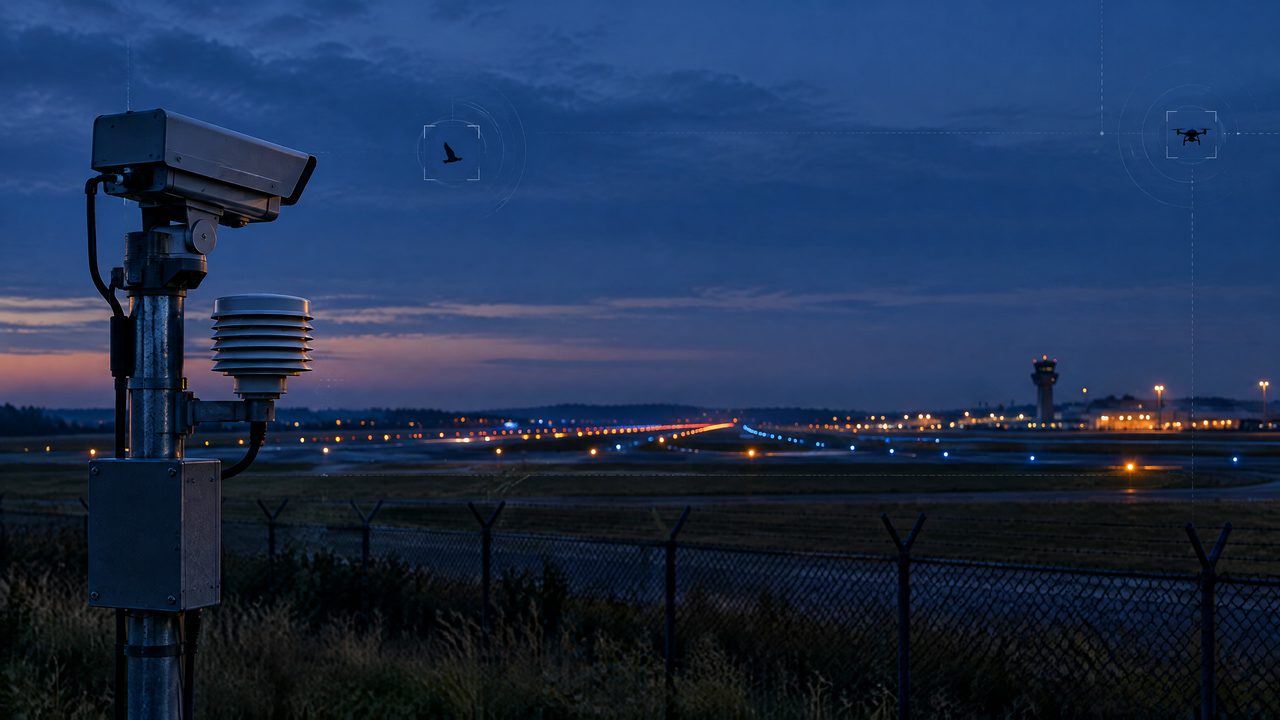
Claims Concerning Saudi Energy Sites and Airports: Attribution Is Not a Protection Requirement
A source-qualified review of attributed claims concerning Saudi energy sites and airports, separated from verification, protection requirements and C-UAS conclusions.
How C-UAS Technology Supports Security Operations at Critical Infrastructure Sites
An educational, project-level guide for New Ark C-UAS readers that explains how counter-uncrewed-aircraft-system (C-UAS) technology can inform security operations at critical infrastructure sites without prescribing deployment or response procedures. It presents acoustic, RF, radar, EO/IR, and fusion as conditional information roles within a broader governance process, emphasizing context, uncertainty, responsible human review, lawful authority, protected services, safety offsets, and written validation.